7 Best Oscillating Tools for Ultimate Versatility
Oscillating tools are handy in the shop or on the job, and the best oscillating tool is designed to fill a variety of applications. Look for tools which are manufactured by leaders in power tool construction, so you’ll know you’re getting a product designed for heavy use and durability.
Cordless oscillating tools have come a long way as newer models continue to improve where power and battery life is concerned while prices are now competitive with corded models. Since you’ll most likely find a lot more jobs for the tool than you’re currently thinking, pick up a kit that includes the most popular pads and tools.
Whether you’re finishing furniture, woodworking, or polishing, one of these top oscillating tool picks will be a good fit.
See Also: Top Rated Dremel Tools
Our 7 Favorite Oscillating Multi-Tools
| Product | Power | Speed (OPM) | Angle | Weight | |
|---|---|---|---|---|---|
 | DeWalt DCS356D1 | 20V Max | 0 - 20,000 | 1.6° | 3.2 lbs |
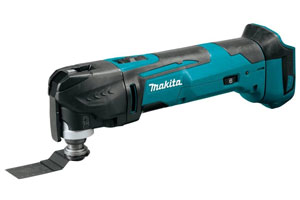 | Makita XMT03Z | 18V | 6,000 - 20,000 | 3.2° | 4.0 lbs |
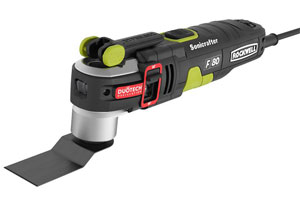 | Rockwell Sonicrafter F80 | 4.2A | 10,000 - 19,000 | 3.4 - 5.0° | 3.3 lbs |
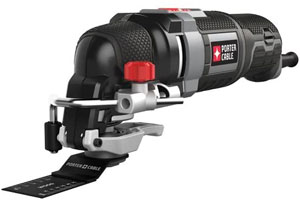 | Porter-Cable PCE605K52 | 3A | 10,000 - 22,000 | 1.6° | 3.2 lbs |
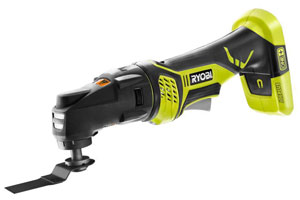 | Ryobi One+ P340 | 18V | 0 - 20,000 | 3.0° | 2.5 lbs |
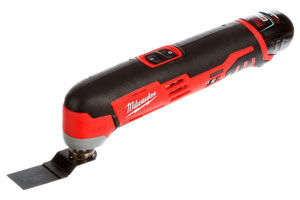 | Milwaukee M12 2426-20 | 12V | 5,000 - 20,000 | 3.0° | 1.6 lbs |
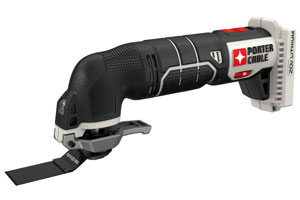 | Porter-Cable PCC710B | 20V Max | 8,000 - 18,000 | 2.8° | 2.7 lbs |
Oscillating Tool Reviews
#1 – DeWalt DCS356D1 20V Max XR Oscillating Tool Kit
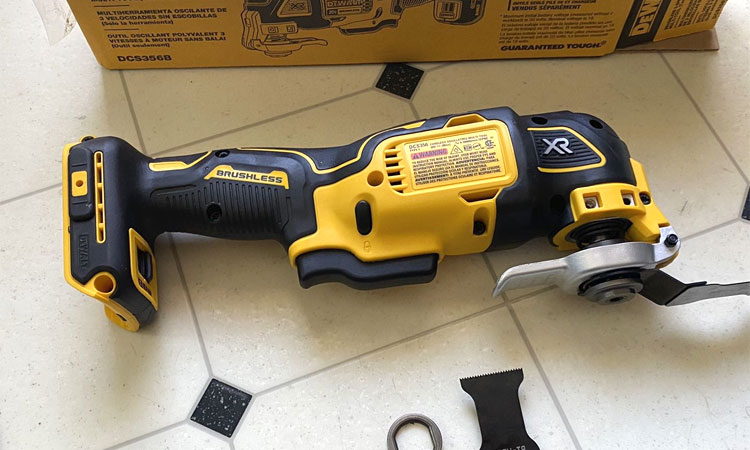
DeWalt has applied their award-winning cordless technology to a portable oscillating tool that delivers big time. At the heart of this complete kit is the DCS356 tool with its brushless motor (longer run time; better reliability).
This new and improved version features 3-speed control by way of its dual-grip variable speed trigger along with software upgrades for better efficiency. The speed selector is great as it limits the max speed of the oscillating multi-tool without having to focus on how much pressure you put on the speed trigger.
- Low Speed = 0 to 13,000 OPM
- Medium Speed = 0 to 17,000 OPM
- High Speed = 0 to 20,000 OPM
Like with other DeWalt power tools, you get professional grade at a respectable price. Sure, you can buy cheaper models (we actually recommend that if don’t plan on using it much), but it’ll be hard to outlast the DeWalt or match its performance.
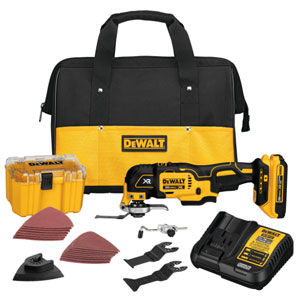 Besides the tool, this kit includes a 2.0Ah battery, quick charger, carrying case, and 28 oscillating tool accessories (including 2 wood cutting blades). If you already have other DeWalt tools and plenty of battery packs, you may want to consider the bare tool instead (although you’ll still need accessories and attachments).
The tool is well-balanced and features an LED work light. The quick-change accessory system is the best in the biz. We love the speed selector switch but it could have been placed in a better location. Also, with constant use, the handle does tend to get hot so it’s recommended to use work gloves for involved projects.
Built jobsite tough and packing the battery technology acquired through years of research, it is hard to go wrong with the Dewalt DCS356D1, unless you forget to pick up a spare battery to double your use time.
There’s good reason why this tool is such a good seller with both pros and DIYers. The DCS356 is arguably the best cordless oscillating tool for the money.
>> Check current price <<
#2 – Makita XMT03Z 18V LXT Cordless Oscillating Tool
If you’re a Makita fan and have some of their other cordless tools, the XMT03Z oscillating multi-tool will be a great addition. This bare tool is compatible with 18v LXT Lithium Ion batteries for up to 20 minutes of continual running.
Accessories change out easily, thanks to a toolless clamping system, while the on/off switch includes a lock on button to make work easier. A variable speed dial allows you to adjust between 6,000 and 20,000 OPM and the 3.2 degree oscillation angle allows for more aggressive cuts.
Other features include reduced vibration and a small diameter barrel grip for better handling.
As with most Makita products, this tool is built to last. Its compatibility with Makita’s LXT batteries makes it possible to purchase this tool bare for a much cheaper price.
The only real downside noted by some users is that the quick-change lever is a little too large and poorly placed, restricting some cuts and preventing the inclusion of an LED light. If you’re simply looking for the best oscillating multi-tool without the need of a kit, this Makita is right up there with the DeWalt and maybe even better.
>> Check price at Amazon <<
>> Check price at Home Depot <<
#3 – Rockwell RK5151K Sonicrafter F80 Oscillating Multitool
Owned and manufactured by the Positec Tool Corporation, Rockwell makes one of the best oscillating tool kits on the market.
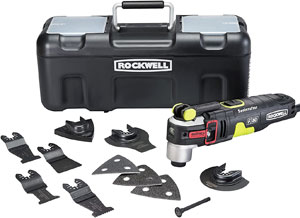
Featuring Rockwell’s patented Hyper Lock and Universal Fit Systems, the Rockwell RK5151K 12-piece set (tool, case, and 10 accessories) provides smooth use without slippage and the ability to use tools and accessories manufactured by other tool makers.
Driven by a powerful 4.2 amp motor, this tool is designed to work faster and harder, and is an improvement over the popular F50’s 4 amps. The kit comes with 10 “usable” accessories so you can go straight to work.
The F80 is also the first tool to feature a choice of two cutting angles in one tool (3.4 and 5.0 degrees) to better match your project’s needs.
The Universal Fit System is also great in that you’ll be allowed to use blades you may have laying around from different manufacturers.
 And to increase your productivity, you can apply up to 35 pounds of force, reducing most cutting times dramatically. The variable speed dial allows you to adjust speed from 10,000-19,000 oscillations per minute for greater control.
You’ll appreciate the tool-less changing system that provides a full 1 ton of clamping power.
The manual that is included with the kit is poorly written in English, so you may have to rely on your ability to decipher pictographs or spend a few minutes on YouTube in order to learn the basics.
But if you have any previous oscillating tool experience you should not have any trouble jumping in and going to work.
Other than that, the only complaints are from those who are surprised to find out that this trusted brand is manufactured overseas, and not related to the tool at all. Fortunately, this is one of those imported products which actually works very well.
>> Check current price <<
#4 – Porter-Cable PCE605K52 Oscillating Tool Kit
A subsidiary of Stanley Black & Decker, USA-based Porter Cable tools are now made in China but have excellent tool quality for the price.
The company is recognized as the inventor of the portable belt sander as well as portable band saw so they know a thing or two about high performance in a small package.
The PCE605K52 features a tool-less changing and adjustment system, and the kit comes with almost twice as many accessories as the Rockwell version (the entire kit totals 53 pieces).
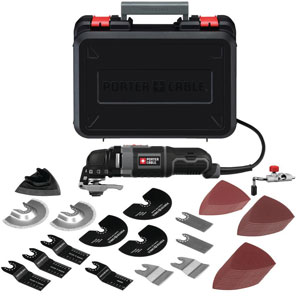
It also has a 10 ft cord that lets you move about while you work without that annoying tug– or worse, power failure– when you reach the end of the cord.
The oscillating speed dial allows you to slow the speed to as little as 10,000 RPM, or max it out at speeds up to 22,000 RPM. The blade uses a 1.6 degree oscillating angle.
The single biggest complaint you might encounter is that the replacement blades and pads are proprietary and cost a bit more for that reason. On the other hand, you can pick up generic and aftermarket accessories at competitive prices.
For long periods of use, you are well-advised to take periodic breaks and allow the motor to cool down. You will feel the housing getting warm when the motor is getting too hot.
>> Check current price <<
#5 – Ryobi One+ P340 18V Cordless Oscillating Multi-Tool
The Ryobi One+ lineup includes some of the best mid-grade power tools on the market, making them an excellent choice for DIYers and hobbyists.
This tool comes with two accessories, the P246 power base and P570 accessory attachment, but requires a Ryobi 18v Lithium Ion battery (not included).
Sanding, crescent saw, and straight woodcutting saw attachments are included. The grip has hex rubber molding to make handling easier. Best of all, the tool is compatible with most accessories from other companies.
The tool operates at up to 20,000 OPM and it uses a 3 degree oscillating angle.
When you look at the price, you wouldn’t expect this to be an easy-to-use tool… but it is. Its durability and quick blade changes make it another great Ryobi success.
Be warned, however, that the warranty only covers tools purchased by authorized sellers, and it’s common to get refurbished tools from independent sellers. Always verify the seller is an official Ryobi dealer before buying this tool.
>> Check price at Amazon <<
>> Check price at Home Depot <<
#6 – Milwaukee M12 2426-20 12V Cordless Multi-Tool
Worried about buying a bare tool and not finding the right size of attachments? The 2426-20 solves this problem by including a universal adaptor as well as a sanding head and multi-purpose head.
You can switch between 12 speed settings ranging from 5,000 to 20,000 OPM and a handy LED fuel gauge ensures you always know how much power’s left via 25% increments. The tool is compatible with Milwaukee’s excellent 12v Lithium Ion batteries.
For a cordless tool, the M12 has a lot of power. Its compact size, low weight (only 1.6 pounds), and durability make it an excellent companion for contractors or craftsmen on the move.
If you need more power, the larger M18 version is also a great choice for renovation projects.
On the downside, the tool has been known to overheat but that seems to be a common occurrence with most when used nonstop. A few users have mentioned the battery can come loose due to vibrations but that seems to be a rare issue.
>> Check current price <<
#7 – Porter-Cable PCC710B 20V Max Oscillating Tool
When you think of bare tools, you don’t expect something like the Porter-Cable PCC710B is going to come with 11 accessories. However, that’s not the only attraction to this tool.
It has a two-finger tool-free system for swapping and adjusting accessories. An integrated LED ensures you can always see what you’re doing, while the 8,000 to 18,000 OPN variable speeds make it easier to control.
A three-position overmold grip makes it easy to wield for longer periods by reducing vibrations. The only things missing are a 20v MAX Lithium Ion battery and charger.
As with other bare tools, you’ll save money if you already have batteries and chargers due to having tools from the same brand.
Lightweight, well-balanced, and powerful, this little tool can do a lot for its price range. As with many other cordless oscillating tools, it can overheat with prolonged use.
Note also the battery must be part of the PCC series, as the tool’s design isn’t compatible with the shape of other MAX batteries.
>> Check current price <<
Tips on Buying Oscillating Tools
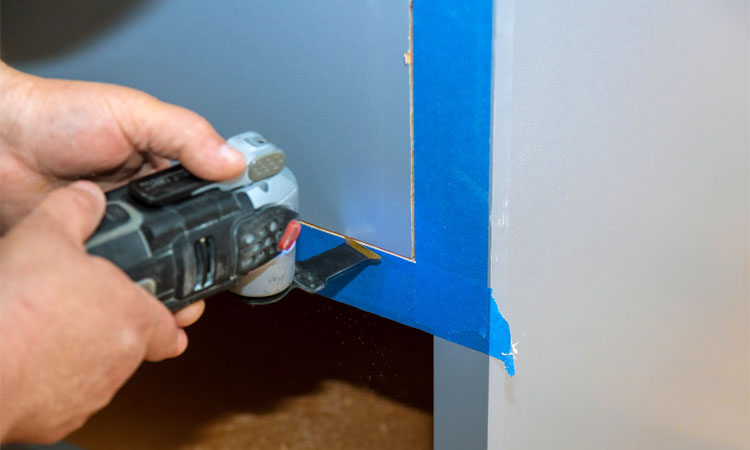
Oscillating multi-tools are some of the best tools out there in terms of multitasking. But this also means there are a lot of things to consider when buying one. This guide will put you on the right track for finding the perfect model for your needs.
Corded vs Cordless
There are distinct trade-offs when buying a cordless model. Corded tools tend to have a bit more power and you don’t have to worry about running out of batteries. That said, buying a cordless model which uses a battery system you already have means you can easily swap out battery packs as needed.
In the end, a cordless model is ideal for those who want/need the freedom to be able to move around a lot and have spare batteries. Corded models are best for individuals who will be doing prolonged, heavy-duty work and won’t be travelling far from an outlet.
For most individuals, a good cordless model is almost always the better choice despite their higher initial cost.
Oscillations per Minute (OPM)
Generally speaking, faster is better and most tools will be capable of 18,000 OPM or higher (when not under load). A higher speed allows the removal of material quicker and cleaner.
Increasing the angle will cause the tool to remove material even faster. Ideally, however, you should aim for variable speed so you can adjust the OPMs to match the particular job requirements.
Oscillating Tool vs Dremel
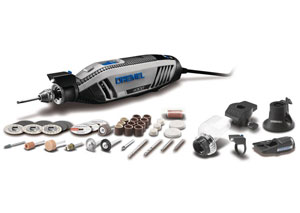
One of the greatest debates outside of whether pineapple belongs on pizza, the matter of whether an oscillating or rotary tool (such as a Dremel) is better than the other has the same answer: It depends on the pizza you use it on.
Rotary tools are best suited for detail oriented work such as etching, polishing, routing, and working on curved surfaces. The range of sizes and low cost of attachments have made rotary tools a staple for most scale-based hobbies such as model building.
Oscillating tools, conversely, produce less dust and work more efficiently on straight surfaces. They can also remove more material in less time. It also allows you to get much closer to obstructions such as protruding nails.
Are Oscillating Tool Blades Interchangeable?
For the most part, this is an easy yes. It’s usually easy to change out blades or attachment types and many modern tools even use a keyless/tool-less changing method for even faster attachment changes.
The only exception to this is when mixing brands. For this, you will sometimes need to purchase an adapter (unless your tool included one).
What Materials Will Your Oscillating Tool Cut?
Depending on the attachments your tool comes with, you can cut a wide range of materials. Consider what you will be working with and aim for a model that has the appropriate attachments:
- Wood – Choose a bi-metal blade or a rigid chrome/steel blade that has double, alternating teeth. Aim for thin, narrow blades possible when working with veneers, trim, or press board. Sanding attachments should use triangular pads.
- Metal – A quality semi-circular or bi-metal blade will work equally well.
- Pipe – Both metal and plastic pipe (such as PVC) can be cut using a treated, stainless steel blade. C6 carbide teeth work great on metals like aluminum, brass, and copper. A PVC pipe cutter is still the better option on plastic.
- Tile – You will want to either use an E-cut blade for small cuts or a semi-circular blade for fuller cuts. (see also: Best Manual Tile Cutters)
- Concrete – A semi-circular blade or blades with polycrystalline diamond carbine teeth can efficiently cut through concrete.