9 Best Jack Stands You Can Bet Your Life On

During a one-year study period, 4,822 people were treated in emergency rooms due to jack failure. Isn’t that reason enough for every home mechanic to get the best jack stands they can afford?
A jack is only meant to lift the car. The stands are what hold it while you’re underneath, and a solid pair costs less than one trip to the ER.
Most people only need a 3-ton pair. The buying guide below covers when it’s worth going bigger, and how to choose the right height and locking style for your vehicle.
Our 9 Favorite Jack Stands
| Product | Capacity | Min Height | Max Height | Weight (each) | |
|---|---|---|---|---|---|
 | ESCO | 3-Ton | 13.2" | 21.5" | 12.0 lbs |
 | Torin AT43005AB | 3-Ton | 11.3" | 16.8" | 8.1 lbs |
 | Torin T43004 | 3-Ton | 10.8" | 15.6" | 4.6 lbs |
 | Pro-Lift | 3-Ton | 11.4" | 16.8" | 6.9 lbs |
 | US Jack | 6-Ton | 16.0" | 25.5" | 15.5 lbs |
 | Torin T43002A | 3-Ton | 11.3" | 16.8" | 7.5 lbs |
 | Sunex | 10-Ton | 28.1" | 46.5" | 58.0 lbs |
 | Arcan | 3-Ton | 11.6" | 17.5" | 7.5 lbs |
 | Roadtek | 3-Ton | 11.3" | 16.6" | 8.6 lbs |
Jack Stand Reviews
#1 – ESCO 10498 3-Ton Jack Stands
Featuring a three ton capacity, the 10498 is a professional grade jack stand with a focus on protecting your car while you work. The top is flat and includes a removable rubber saddle cushion to reduce the risk of scratching paint.
Height is set with a steel locking pin instead of a ratchet, and the powder coated base with circular base pads offers excellent stability, making the ESCOs one of the safest jack stands on the market. ESCO also rates each stand at 3 tons, where most brands rate the pair.
Each stand weighs about 11 pounds and extends from 13.2 inches to 21.5 inches, making it one of the tallest 3-ton jack stands available. It works well for cars, SUVs, and many trucks.
Auto enthusiasts rave over these stands and there’s a good chance once you try them, you’ll never want to go back to the more traditional jack stands again.
This listing is the pair, so one order covers one end of the car. ESCO also makes axle-top and low profile (11″ to 17″ height) versions so check the model. While not the cheapest jack stands out there, they are worth every penny.
The biggest drawback is that 13.2-inch minimum, which can be too tall for many cars. If you drive a sedan or anything lower, ESCO’s 10499 Shorty is the better buy. A few buyers have also gotten stands with poorly drilled holes that block the pin, so test every height when they arrive. This issue is rare, but provide a good reason to inspect upon arrival.
Best for: SUVs and light trucks, or anyone who wants a pin-lock stand that’s easy on paint.
>> Check current price <<
#2 – Torin AT43005AB Heavy Duty 3-Ton Jack Stands
Similar to the best-selling Torin Big Red stands on this page, consider these the newer and slightly beefier variation, with the same 3-ton rating on a wider base. Built with high-grade forged steel and a welded frame, these jack stands are built to last.
They can hold up to 6,000 pounds per pair, which is plenty for a DIY oil change or tire rotation on most cars. However, full-size SUVs and pickups may want to go with taller 6-ton stands like the US Jack (below), since these top out just under 17 inches.
A sawtooth ratcheting system allows you to adjust the height from 11 5/16” to 16 ⅞”. Once at the desired height, a locking pin slides through the column as a backup to the ratchet, so the load is held two ways. The reinforced pyramid foot base provides extra stability and measures 7.95” x 7.2”. Steel bars under the feet help keep the stand from sinking or shifting when under weight.
The larger saddle surface is better for supporting the vehicle, but it can also mean a more difficult time finding the perfect spot to use them initially. Of course, once you’ve found those perfect spots, you’ll know where to find them the next time.
It’s hard to find a better value than these Torins. Solid build quality, safe, easy to adjust, and a good height range should put them near the top of your list.
Best for: cars, crossovers, and small SUVs when you want a double-lock stand without paying premium-brand money.
>> Check current price <<
#3 – Torin Big Red T43004 Aluminum 3-Ton Jack Stands
The aluminum frame of these excellent jack stands is extremely lightweight (under 5 pounds each), giving you maneuverability in confined locations. Plus, aluminum construction is rust-free so you won’t have a problem with the stand becoming stuck or difficult to operate.
You will appreciate the pin through design because it’s safer and more dependable than a ratchet model, eliminating the fear of the stand slipping or dropping on you.
Many jack stands have a pyramid-shaped base, but not the T43004. Instead, it’s designed to resemble a traditional piston-operated hydraulic jack, with a large cast aluminum base and a flanged top that makes positioning easy.
An added benefit is the flat bottom which better distributes the weight on your garage floor as opposed to the traditional 4-leg design, which has a better chance of making your perfect garage floor (or new garage floor tiles) not-so-perfect.
Lift height ranges from 10-3/4″ up to 15-5/8″ across six positions. That minimum is the lowest on this list, which makes these a good match for cars with low clearance. They also knock down for storage, part of why they’re a favorite of track and autocross drivers.
One downside is the limited height, so those with trucks or SUVs may want to consider a set with a higher range such as ESCO (above), Torin extended height, or the US Jack and Sunex stands (below).
Also, it’s hard to get over the fact that these will hold up your vehicle since most of us are used to the traditional pyramid shaped stands, but they definitely will, as they’ve been a best seller for years.
Best for: lowered cars and track days, or anyone who wants a light, rust-free stand that’s easy to carry.
>> Check current price <<
#4 – Pro-Lift T-6903D 3-Ton Jack Stands
Pro-Lift is better known for its floor jacks, but the T-6903D has become a popular budget pick for home garages. It’s a 3-ton pair with a stamped steel base and a cast ductile iron ratchet bar that adjusts from 11-3/8″ to 16-3/4″. It’s also one of the least expensive pairs on this list.
The draw here is the double lock. Counterweighted pawls hold the ratchet bar, backed by a lock on the release handle, and an attached pin slides through the bar as a second support point. Since the pin is attached, it won’t end up lost in a drawer.

Some owners point out that the ratchet teeth are cleanly cast compared with other budget stands, but a few have received pairs with rough welds, so look them over before the first use. And like the Torins above, these top out under 17 inches, so they’re not a truck stand.
Best for: a budget double-lock pair for cars and small SUVs, or a second set for tire rotations.
>> Check current price <<
#5 – US Jack D-41610 6-Ton Garage Stands
If you’d rather keep your truck on American steel, US Jack is the brand to know. The Michigan company builds its stands from US steel and US-made ductile iron castings, and most of its business comes from government contracts.
The D-41610 is a 6-ton pair that adjusts from 16 inches to 25-1/2 inches, filling the gap between the 3-ton stands above and the high-lift Sunex below. Each stand sits on an 11-inch square base of stamped legs tied together by a welded perimeter ring. A double lock system uses two ductile iron castings that lock onto the teeth of the load bar.
That 16-inch minimum is too tall for most cars, so this is a truck and SUV stand. There’s no backup pin, either, though the double lock is a step up from a single ratchet. And “made in the USA” doesn’t come cheap. These cost noticeably more than imported 6-ton stands.
Best for: full-size trucks and SUVs, and anyone who wants an American-made stand.
>> Check current price <<
#6 – Torin T43002A Big Red 3-Ton Jack Stands
The popular Torin T43002A jack stands offer the more traditional stand design and are very affordable. Also available in 2-ton and 6-ton versions, they use a double locking design: the ratchet bar locks in place, and a removable pin slides through it as a backup for peace of mind.
You have plenty of room for height adjustment, ranging from 11-1/4 inches up to a maximum of 16-3/4 inches. There’s even an extended height version which goes up to 20.5″ if needed.
With a compact pyramid base, these stands have a good solid footprint while fitting in spots without much issue. Solid construction, strong (but slightly messy) welds, and a uniquely designed support head make the highly regarded Torin T43002A a great value.
The catch is that the AT43005AB above covers nearly the same height range on a wider base. This one mostly wins on price and availability, since home improvement, farm, and auto part stores often carry it, as well as Amazon.
Best for: a proven, easy-to-find 3-ton pair for cars and small SUVs.
>> Check current price <<
#7 – Sunex 1410 High Height 10-Ton Jack Stands
This pair of pin-type heavy duty jack stands has an impressive 10-ton capacity and by far the tallest range on this list. Its 28.1 inch bottom height is higher than many stands at full extension, and it extends all the way to 46.5 inches, making it perfect for Jeeps and lifted trucks.
Note: Make sure the 28.1 minimum height is low enough clearance for your vehicle. Sunex also makes Medium Height and Low Height variations of this same jack stand.
The attached pin locks into 10 positions in 2-inch steps, and a large saddle with locating lugs holds the frame securely. Each stand sits on a four-leg base nearly 16 inches square, so they’re stable, but at almost 58 pounds each, they are HEAVY.
That weight also shows up in shipping, with a few buyers receiving bent frames, so order from a seller that makes returns easy. And if you need this much height every weekend, a home garage car lift may be the better investment.
Best for: lifted trucks, Jeeps, and farm equipment that standard stands can’t reach.
>> Check current price <<
#8 – Arcan ALJS3 3-Ton Jack Stands
More known for their top-selling floor jacks, it’s only natural Arcan offered jack stands. The ALJS3 is a pair of budget-friendly jack stands with a combined rating of 3 tons. Arcan also sends its lifting gear out for third-party testing to the ASME PASE safety standard.
The support column adjusts from 11-5/8″ to 17.5″ using a ratcheting system. A counterweighted pawl drops into place on its own, and a large contoured saddle with locating lugs helps position the vehicle frame. The welded steel base has flat pads on the feet to keep it from sinking into asphalt.
These jack stands are relatively inexpensive and do a decent job. However, there’s no secondary locking pin, which is a common complaint that reduces some of the confidence users have in the stand. Some owners also wish the base were wider for extra stability.
Best for: budget-minded buyers who want third-party tested stands and don’t mind a ratchet-only lock.
>> Check current price <<
#9 – Roadtek RGM-JS3T 3-Ton Jack Stands
Roadtek is a newer name, better known for its electric floor jacks, but its GarageMax stands take a different approach to the base. Instead of four welded legs, each stand sits on a one-piece steel cone about 7-7/8 inches across. With no leg welds to crack, there’s one less failure point, and the round base spreads the load so it’s less likely to dig into asphalt.
The pair is rated for 3 tons and adjusts from 11-1/4″ to 16-9/16″ on a 10-position cast iron ratchet bar. A metal pin backs up the ratchet. Instead of a lever, you release it with a self-locking knob designed to avoid the sudden drop of a handle release. Both stands are ASME PASE certified.
The main trade-off is track record. Roadtek doesn’t have decades of garage use behind it, so there’s less long-term owner feedback to go on. Height also tops out under 17 inches, same as most 3-ton stands here.
Best for: a 3-ton pair with no welded legs, especially if you work on asphalt.
>> Check current price <<
Jack Stand Buying Guide

Weight Capacity (2-Ton vs 3-Ton vs 6-Ton or More)
Jack stands are rated per pair, and that pair is meant to hold up one end of the vehicle, not the whole thing. A set of 3-ton stands is rated for 6,000 pounds between them, or 3,000 pounds each. A few brands (like ESCO) rate each stand on its own, so check the fine print.
The simplest rule is to choose a pair rated for at least your vehicle’s full curb weight. One end usually carries around 55 to 65 percent of the total, so that leaves a healthy margin even on the heavier end, which is usually the front where the engine sits.
Curb weight is in the owner’s manual, or you can find it with a quick search of your year and model. The GVWR (gross vehicle weight rating) on the driver’s door sticker works too. It’s the maximum loaded weight, so it’s always higher and adds even more margin.
As a general rule:
- 2-ton (4,000 lb) pairs fit compact cars like a Civic, Corolla, or Mazda3.
- 3-ton (6,000 lb) pairs cover midsize sedans, crossovers, minivans, and most half-ton pickups.
- 6-ton (12,000 lb) pairs are for full-size SUVs, three-quarter-ton and heavier trucks, and anything lifted.
Capacity isn’t the only reason to step up, either. Bigger stands are also taller, and on trucks the extra height often matters more than the extra tons. When you’re under your truck, you don’t want to be thinking “this set of jack stands should be enough.”
Height Range

Every stand has a minimum and a maximum height, and both are important.
The minimum decides whether the stand will fit under your car. You have to raise the support point a little above the stand’s lowest setting before you can slide it in. A tall minimum means lifting the car higher before the stand fits, which takes more jack height and puts the car higher than some jobs need.
That makes your floor jack part of the equation. The jack has to lift the vehicle a couple of inches higher than the height you plan to set the stands, since you lower the car onto them from above. Many full-size floor jacks top out around 18 to 20 inches, while some compact and budget models stop well short of that. Check your jack’s max lift height before you buy stands at the tall end of the range.
The maximum decides how much room you have to work. For oil changes and brake jobs on a car, most people never go past the middle settings of a standard 3-ton stand. Lifted trucks and Jeeps are a different story, since their frame rails can already sit near the top of a standard stand’s range.
Most car stands start around 10 to 13 inches and top out between 16 and 22. Truck stands typically start around 15 or 16 inches and reach the mid-20s, and high-lift pin stands go past 40 inches. Specialty shop stands reach close to 70.
A good way to choose is to measure from the ground to your support points with the vehicle sitting on its wheels. Then add 2 to 3 inches to get the tires off the ground. That number should land in the lower half of the stand’s range. That way there’s less column sticking out under the load, and you still have room to go higher if a job calls for it.
Design Styles

Most jack stands lock their height in one of three ways, and the base usually comes in one of two shapes. Here’s how each design works and where it fits.
Ratchet
A ratchet stand has teeth along its center column and a spring-loaded or weighted pawl that drops into them. You pull the column up to the height you want, and it locks automatically. To lower it, you lift the release handle.
It’s the fastest style to adjust, which is why it’s so common. The trade-off is that the pawl and teeth are doing all the work. If the pawl doesn’t fully seat or the teeth are worn, the column can slip.
That’s exactly what happened in 2020, when Harbor Freight recalled about 1.7 million Pittsburgh 3-ton and 6-ton ratchet stands. The pawl could disengage under load if the weight shifted, letting the stand drop suddenly. A replacement 3-ton model was later recalled too, for a welding defect in a small number of units.
Pin
A pin stand uses a column with holes drilled through it and a solid steel pin that passes through the stand and the column. There’s no moving lock to wear out or fail to engage, so it’s the most positive lock you can get.
Adjusting takes longer, since you have to hold the column while lining up the pin. The steps between heights are also bigger, often 1-1/2 to 2 inches. Look for a pin that’s tethered to the stand so it doesn’t wander off.
Double-Lock
A double-lock stand combines the two. It adjusts like a ratchet, then a pin slides through the column as a backup in case the pawl ever lets go. You get quick adjustment and a second layer of protection, which is why this style has become such a popular choice for home garages.
Pillar and Round-Base
Instead of four welded legs, a pillar stand rises from a solid round or flat base. The wider contact area spreads the load, so it’s less likely to dig into asphalt or mark a coated floor, and there are fewer welds that could crack. Most pillar stands are car-sized, and the round base needs a bit more room to set in place.
High-Lift
High-lift stands are tall, heavy pin-type stands built for lifted trucks, farm equipment, and trailers. They sit on wide four-leg bases for stability and often weigh 50 pounds or more each. Their minimum heights usually start in the high teens or higher, so they won’t fit under most cars or stock trucks.
Steel vs Aluminum
Steel stands are heavier, cost less, and come in every capacity and height range. Their main weakness is rust once the paint chips, especially in damp garages.
Aluminum stands weigh roughly half as much and won’t rust, which makes them popular for track days and anyone who moves stands around a lot. They cost more at the same capacity and are mostly made in car-sized 2- and 3-ton versions.
Base and Saddle
A wider base is more stable, but it also needs more room to slide into place. If you work on asphalt, look for flat pads on the feet or a solid round base so the stand doesn’t sink in.
The saddle is the part that touches the vehicle. A V-shaped or notched saddle cradles axles and frame rails. A flat rubber pad is easier on paint and pinch welds. Locating lugs on the saddle edges help keep a frame rail centered.
Frequently Asked Questions
Where do I put jack stands under the car?
Use the support points listed in your owner’s manual. On most cars and crossovers, that’s the pinch weld seam just behind the front wheels and ahead of the rear wheels, while trucks usually go on the frame rails. A slotted pinch weld adapter protects the seam. Never set a stand under the oil pan, a suspension arm, or a plastic panel.

- BEST PROTECTION FOR YOUR CAR UNDERCARRIAGE:Seven Sparta 4-piece jack pad adapter set...
- SAFE & HEAVY DUTY CONSTRUCTION:Crafted from durable rubber material with a suggested...
- PERFECT CUSHION DESIGN:Engineered to be rigid enough for stable support, yet soft enough...
- UNIVERSAL FIT:Compatible with most jacks and vehicles, and works great with jack...
- GROOVE DESIGN FOR EXTRA PROTECTION :The center groove effectively shields frame rails...
Can jack stands fail?
Yes, though it’s rare with a quality stand used correctly. Stands can fail from overloading, from dropping the car onto them too hard, from damaged parts, or from a manufacturing defect like the Harbor Freight recall mentioned above. Check for bent legs, cracked welds, and worn ratchet teeth before each use.
Are jack stands or ramps safer?
Both are safe when used correctly. Ramps have no lock to slip and are quicker to set up for an oil change, but they can slide on a smooth floor, and you can drive off the end. Since the wheels stay on the ground, ramps also won’t work for tire, brake, or suspension jobs.

- 12,000 LB GVW CAPACITY HANDLES CARS, TRUCKS, SUVS AND VANS -- Rated at 6,000 lbs. per ramp...
- CORROSION-RESISTANT HIGH-IMPACT POLY CONSTRUCTION BUILT TO LAST -- Unlike steel ramps that...
- NON-SKID TREAD PATTERN KEEPS TIRES FIRMLY ON THE RAMP -- The engineered non-skid tread...
- RUBBER FEET ANCHOR THE RAMPS FIRMLY TO THE GROUND -- Built-in rubber feet on the underside...
- VERSATILE DIMENSIONS FIT A WIDE RANGE OF VEHICLES -- At 35.5 in. long, 12 in. wide, and...
Can I use just one jack stand?
For a quick job on one wheel, a single stand under that corner’s support point is common, and some manufacturers’ instructions allow it. If you’ll be working under the car, use a matched pair at the same height. Make sure the car is stable before you slide under on a mechanics creeper.
How long can a car sit on jack stands?
A few hours or a weekend project is normal. Manufacturers warn against leaving a vehicle on stands for extended periods, so for anything longer, check the stands often or put the car back on its wheels.
Can jack stands go on asphalt or gravel?
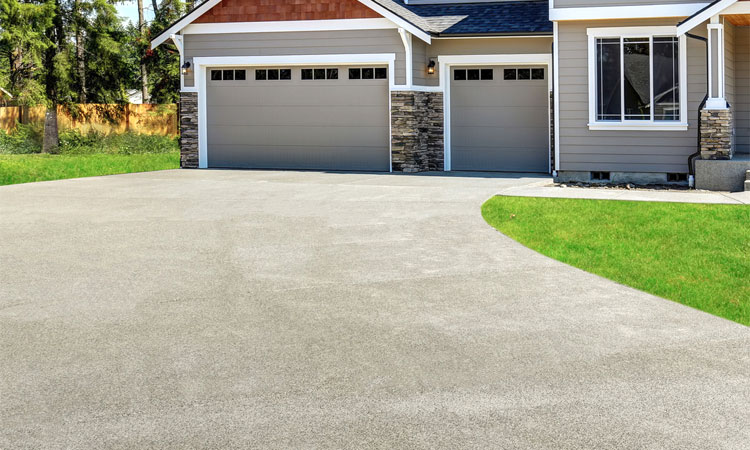
Concrete is best. Asphalt softens in the heat, and narrow legs can sink in. Use stands with flat foot pads or a round base, or set them on a steel plate or thick plywood. Skip gravel and dirt entirely, since they can shift under load.
Can I use wood or cinder blocks instead?
No. Cinder blocks are made to carry even loads in a wall and can crack or crumble without warning under a car. Wood can split or slide, and neither one has a load rating. A pair of rated stands is cheap insurance.